Two people.
One impossible
appetite.
The world’s machinery becomes legible through a sister trying to stay beside her brother. Begin with them before expanding the city around them.
Protection is
a physical act.
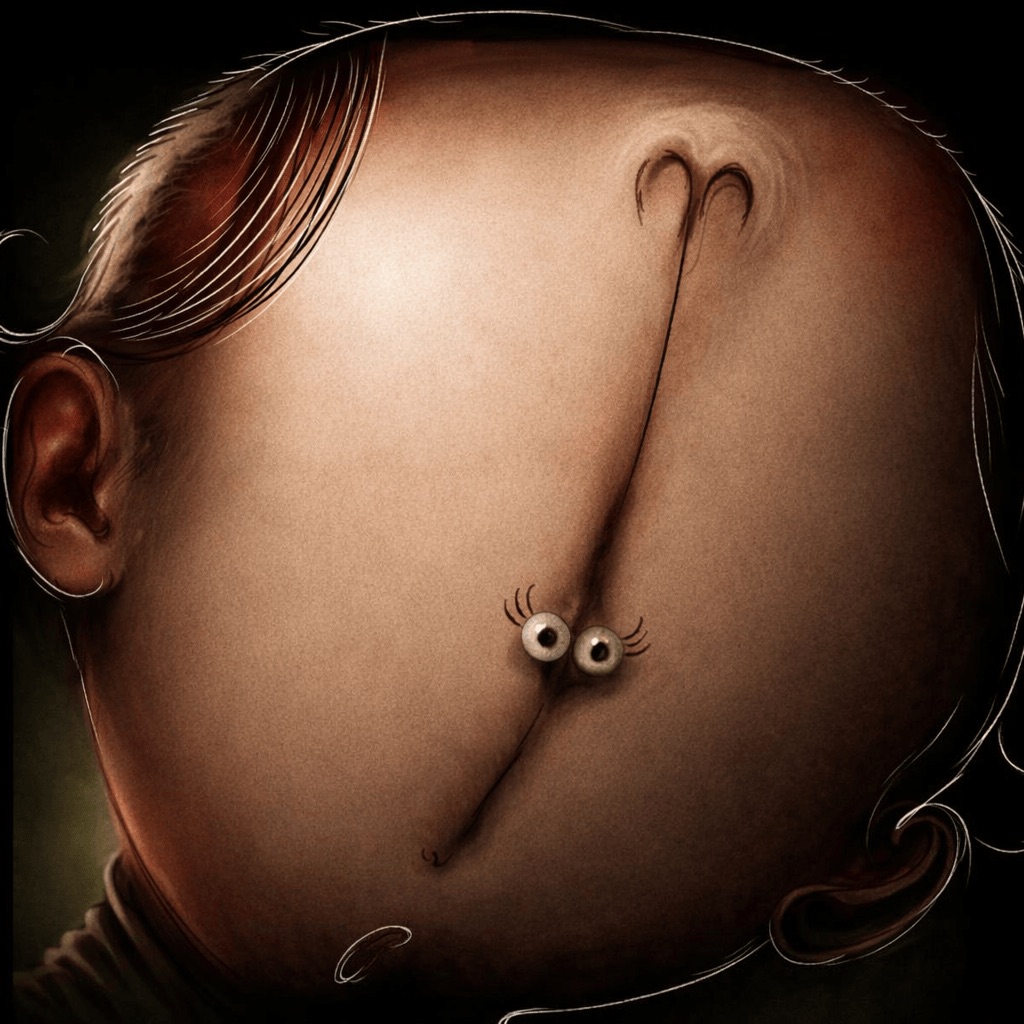
Magret cannot solve hunger before responding to Gerben. His need arrives at the same time as her own fear, fatigue and need to eat. She has to move with all of them.
Her attachment becomes practical: a hand, a route, a moment gained before somebody gets too close. Keeping Gerben safe is repeated work, done in surroundings that keep changing.
She is compelling because she is under pressure, too. Devotion has no protected place outside the body. Her hunger makes the act of staying with him a continuing decision.
Read Magret in the source world ↗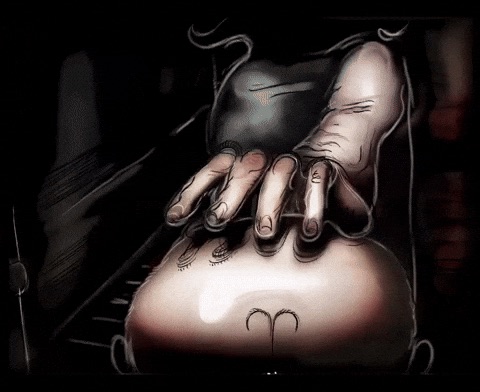
A loaf can
be frightened.
Gerben’s body becomes a joke the viewer understands instantly. Bread has crust, softness and the promise of something to bite. His vulnerability makes that easy recognition uncomfortable.
The changed shape does not erase his place in Magret’s life. An uncertain expression or a reaching gesture can carry that continuity without a speech explaining it.
He matters as someone to accompany, not simply as a problem to reverse. The story’s emotional force comes from keeping a person visible inside a form everyone knows how to consume.
Read Gerben in the source world ↗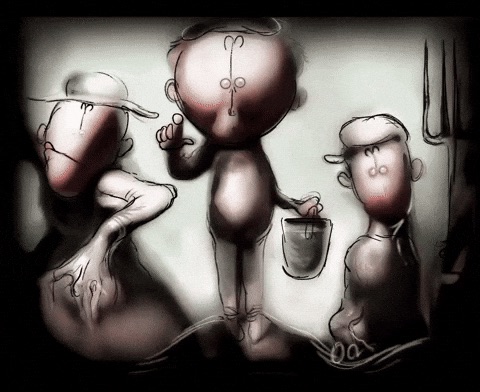
Human faces.
Predatory attention.
The pursuing humans keep the threat uncomfortably close to ordinary life. Their hunger does not require Gerben to be hated. It requires his body to look like an answer.
The distinction between appetite and cruelty becomes difficult to hold at speed. Need supplies the pressure; the chase shows what happens when another life is reduced to a means of relieving it.
Magret moves inside that pressure rather than beyond it. The crowd makes her struggle visible at a larger scale: how long can someone recognise a person when survival rewards seeing food?
Follow the human questions →